


Far more than just a fleeting physical sensation, the female orgasm is a whole-body event in which nervous, endocrine, and muscular systems work together in a synchronized “pleasure symphony.”
Still, when it comes to female orgasm, a historical lack of scientific focus has left many people with questions about how it works. This guide serves as a resource to break down the neuroscience, anatomy, and practical pathways to maximizing female pleasure.
What is a Female Orgasm?
A female orgasm is a brief, high-intensity culmination of sexual stimulation that triggers involuntary contractions of the pelvic floor muscles, an immediate release of physical tension, and a powerful rush of neurochemicals.
During a female climax, the brain’s pleasure centers light up intensely!
Sexual Response
For decades, human sexual response was poorly understood. It wasn’t until mid-20th-century pioneers like Dr. Alfred Kinsey and the research duo William Masters and Virginia Johnson began documenting human sexuality in laboratory settings that scientists gained clear vocabulary for these experiences.
Dr. Kinsey famously compared the orgasm to the crescendo and sudden stillness of an orchestra (or, more simply, to a sneeze) capturing both its rhythmic build-up and its sudden, involuntary release.
How Do Orgasms Work?
Orgasms are one phase of a four-phase biological progression known as the Human Sexual Response Cycle, which dictates how the body transitions from initial arousal to peak climax and subsequent recovery. Developed by researchers Masters and Johnson, this framework outlines the predictable physiological shifts experienced during sexual activity.
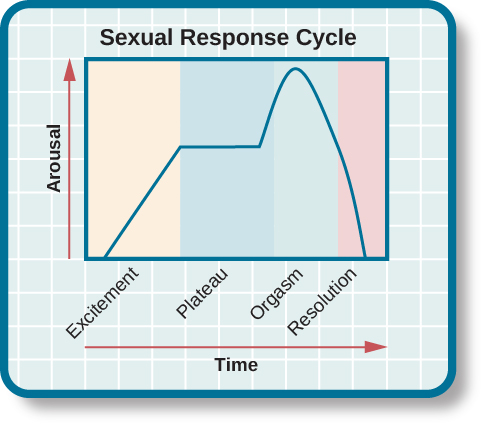
The four core phases of this cycle function as follows:
Phase 1: Excitement
This phase begins within moments of physical or psychological sexual stimulation. For women, the vagina begins to lubricate, expand, and lengthen internally. Blood flow increases to the pelvic region, causing the labia majora, labia minora, and internal and external clitoris to swell. Heart rates quicken and breathing patterns accelerate.
Phase 2: Plateau
The physiological changes from the excitement phase intensify. A visible “sex flush” or temporary darkening of the skin (which sometimes starts in the phase before) gets much more prominent across the neck, chest, or face. Muscles in the hips, buttocks, and thighs begin to tighten or spasm. The outer third of the vaginal wall swells and narrows (forming what researchers call the orgasmic platform), while the clitoris retracts tightly under its protective hood.
Phase 3: Orgasm
This is the shortest phase of the cycle, typically lasting anywhere from a few seconds to over half a minute. Muscular tension and blood vessel engorgement reach their absolute peak and then are released by rhythmic contractions of the pelvic floor muscles.
Phase 4: Resolution
During resolution, the body gradually reverts to its resting, pre-arousal state. Swelling decreases in the genitals, and muscles fully relax. While most men enter a refractory period (a window of time during which they cannot physically achieve another erection or climax), most women don’t have such a phase. This means women remain physically capable of responding to continued stimulation and achieving multiple, consecutive orgasms.
What Happens When a Woman Orgasms Physically and Neurologically?
When a woman orgasms, the brain undergoes a profound neurochemical surge while pelvic nerve pathways transmit rapid electrical signals from the genitals to the central nervous system. Modern neuroimaging tools, such as functional Magnetic Resonance Imaging (fMRI), allow scientists to look directly inside the brain during climax.
The Brain on Sex: What the Neuroimaging Shows
In groundbreaking fMRI studies spearheaded by researchers Dr. Barry Komisaruk and neuroscientist Dr. Nan Wise, brain activity was tracked during self-stimulated climaxes. These researchers discovered that an orgasm acts as an all-encompassing brain event including various parts of the brain (e.g., sensory cortex, limbic system, frontal cortex, cerebellum, and hypothalamus).
Hormones Released During Orgasm
The primary hormones released during orgasm are oxytocin, dopamine, and prolactin, which combine to induce deep feelings of emotional bonding, intense pleasure, and physical relaxation. These biochemical messengers flood the bloodstream during the peak and resolution phases of the sexual response cycle.
- Oxytocin: Released by the hypothalamus; triggers the physical contractions of the uterus and feelings of bonding.
- Dopamine: Spikes inside the nucleus accumbens (the brain’s reward center); drives sexual desire and creates the euphoric, rewarding sensation of climax.
- Prolactin: Released immediately following climax; responsible for the post-orgasmic drop in arousal and sexual satiety. It may also cause sleepiness.
The Nervous System: The Pathways of Pleasure
Genital tissue is densely packed with specialized sensory nerve endings designed to relay sensations to the spinal cord and brain. Interestingly, different regions of the vulva, vagina, and internal anatomy are wired to separate nerve pathways. Different primary nerve groups govern the female reproductive system:
- The Pudendal Nerve: Transmits sensory data from the external clitoris and the perineum. It was very recently discovered that the clitoral glans contains upwards of 10,000 nerve fibers packed into a very small area.
- The Pelvic Nerve: Routes signals from the cervix, internal vaginal walls, and the rectum.
- The Hypogastric Nerve: Connects to the uterus and the cervix.
Ultimately, however, all these nerves converge in an area of the spinal cord and are relayed to the brain’s pleasure center.
One exception is The Vagus Nerve which sends information from the cervix and other deep parts of the vagina directly to the brainstem, bypassing the spinal cord entirely. Scientific Breakthrough: Because the vagus nerve bypasses the spinal cord completely, studies have confirmed that women with severe spinal cord injuries, including paraplegia, can still experience orgasms from deep genital stimulation.
Anatomy of the Clitoris
The human clitoris is an extensive erectile structure whose true size and internal architecture were brought into the limelight by medical science in 2005 by the first MRI studies on the clitoris conducted by Helen O’Connell. The visible external part of the clitoris is merely the “tip of the iceberg.”
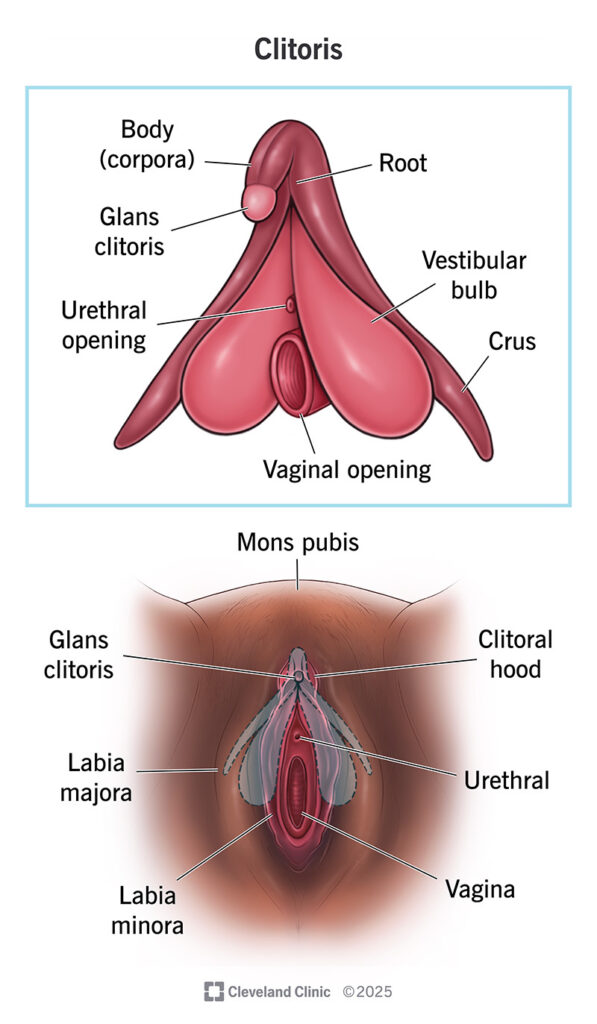
The Internal and External Anatomy of the Clitoris. Cleveland Clinic
When a woman becomes aroused, the internal components of the clitoris engorge with blood. One part of the clitoris, the bulbs, swell to hug the outer sides of the vaginal canal. This means that internal vaginal penetration inherently involves stimulation of the internal clitoris.
Indeed, the clitoris is analogous to the penis and has a lot of erectile tissue. An orgasm is when all this erectile tissue fills with blood and then is released with contractions of the pelvic floor.
Orgasms from Different Types of Stimulation
Women can have an orgasm from a variety of types of stimulation.Some scientists say there are distinct types of female orgasms, and they often point to the different nerve pathways as a piece of evidence, along with some women saying orgasms can feel different depending on where they are getting stimulation. Other scientists say all orgasms are clitoral, as all involve the erectile tissue of the clitoris. Indeed, many say it’s time to stop the long-standing scientific debate over whether vaginal and clitoral orgasms are separate events since almost all female orgasms involve the erectile tissue of the clitoris.
Additionally, since too often women get the message that “types” of orgasms are a checklist to make ones way though and/or feel pressure to orgasm a specific way, sex therapists advise to stay away from “type of orgasm” language. They say instead to talk about orgasms from different types of stimulation.
1. Orgasms From Clitoral Stimulation
Stimulating the external clitoris (which includes the hood and glans) is the most common and reliable driver of sexual climax for women.
Stimulating the external clitoris with fingers, a tongue or a clitoral vibrator is likely to result in orgasm. In one well-cited study, about 73% of women either need or prefer clitoral stimulation for orgasm and only 18% say intercourse alone is sufficient for orgasm. However, in surveys asking women their “most reliable route to orgasm” the number of women saying clitoral stimulation is even higher, with 96% saying external clitoral stimulation (alone or coupled with penetration) is their most reliable route to orgasm.
2. Orgasms from Vaginal and G-Spot Stimulation
Some women orgasm from vaginal stimulation alone but this is more rare. A major focal point of internal stimulation is the G-spot (short for the Gräfenberg Spot, named after German gynecologist Ernst Gräfenberg).
The G-spot is an erogenous zone located roughly two inches up the front (anterior) wall of the vagina, situated between the vaginal opening and the urethra. It’s actually more of an area than a spot and includes vaginal tissue, internal clitoral tissue, and tissue that surrounds the urethral canal. That’s why it’s often called the clitoral-urethral-vaginal complex.
3. Orgasms from Anal Stimulation
Many women like the sensation of anal stimulation including on the surface, a tiny bit on the inside (up to a knuckle), or even full on penetration. Some even orgasm from such stimulation.
Because the anus does not self-lubricate and possesses a naturally tight muscular ring, safe exploration requires a great deal of preparation and high-quality lubricant. A great book to learn more about engaging in anal play safely is “Butt Seriously.”
4. Orgasms from a Combination of Stimulation
When women orgasm, most say it is from a variety of types of stimulation. Many women say that pairing external clitoral stimulation with penetration is their most reliable route to orgasm. Others like pairing anal stimulation with clitoral stimulation, for example.
5. Stimulation of Non-Genital Erogenous Zones
For individuals with high sensory sensitivity, targeted touch to non-genital erogenous zones (such as the neck, inner thighs, nipples, or earlobes) can generate intense arousal. Some women can also orgasm from such stimulation – especially stimulation of the breasts (which interestingly light up the same area of the brain as clitoral stimulation).
In rare instances, women can even orgasm through mental fantasy or vivid dreams without any direct physical contact.
Best Techniques for Female Orgasm
Since most women need clitoral stimulation, either alone or coupled with other types of stimulation (anal, vaginal) to orgasm, getting that type of stimulation is generally key. Here’s a few ways to do so:
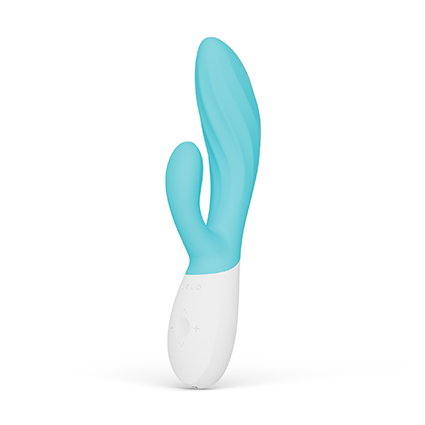
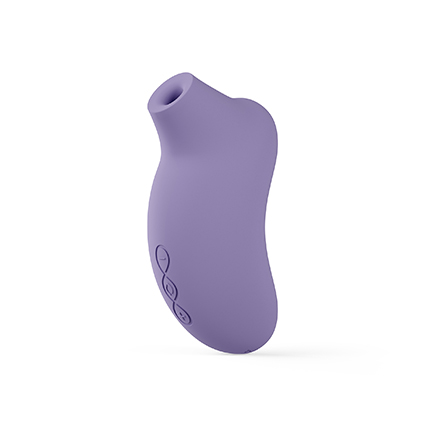
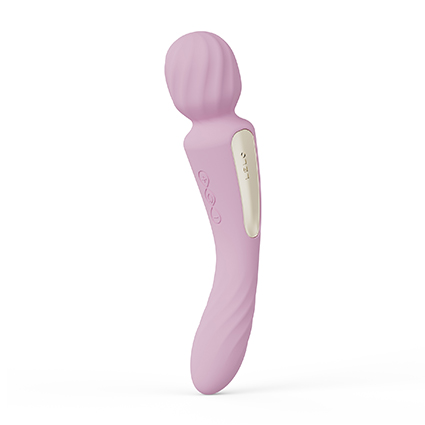
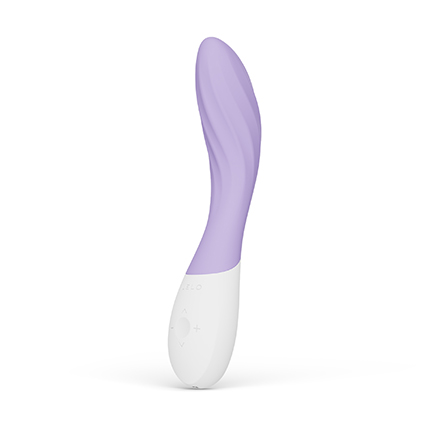
- Incorporate Targeted Devices: Since the vast majority of women require direct external stimulation, introducing a dedicated clitoral vibrator is a proven strategy. In fact, the external genitals have special receptors that respond to vibration!
- Consider Clitoral Stimulation and Penetration as Equally Important. Clitoral stimulation shouldn’t be treated as just a lead up to the main event, penetration. It should be considered as important as penetration.
- Boost Your Sexual Self-Esteem: Reducing anxiety can facilitate orgasm. Setting a relaxing mood, practicing open communication with your partner, and cultivating a positive body image can drastically improve your chances of climaxing.
- Practice Mindfulness. Learn to focus on sensations versus thoughts during sex.
Also, again, since most women need clitoral stimulation alone (without penetration), the focus should be here. One great strategy is to take turns with a partner giving and receiving stimulation. Maybe, for example, the woman orgasms from oral sex, and then the man from intercourse. Or maybe there is oral sex turn taking. Or maybe a woman orgasms during vibrator play and then her partner during intercourse.
For those who do want to orgasm during intercourse, touching oneself with hands or a vibrator is a scientifically supported strategy. A great toy for this is LELO’s MIA-3 as it fits well between two bodies. A great position for this is spooning.

Spooning or entering from a side leaves the woman’s or her partner’s hands completely free to use a vibrator or provide manual clitoral stimulation throughout intercourse.
If a woman wants to orgasm during intercourse, without touching herself with hands or a vibrator, it’s best to use a position in which her clitoris can be stimulated. Two are below.
The Coital Alignment Technique (CAT)
The Coital Alignment Technique is a deliberate variation of the traditional missionary position designed specifically to maximize clitoral contact. The penetrating partner shifts their weight upward along the woman’s body so that the base of the penis rides firmly against the external clitoris with a rhythmic, sliding motion rather than a deep thrusting movement.
Woman on Top (Cowgirl)

This position places the woman in total control of the sexual rhythm, depth, and pelvic angle. By straddling her partner, she can lean forward to grind her clitoris directly against her partner’s pubic bone for direct clitoral friction.
The Orgasm Gap: Common Myths vs. Medical Facts
The “orgasm gap” refers to the statistical disparity in heterosexual encounters where women achieve a climax significantly less often than their male partners. This gap is primarily driven by societal taboos, lack of anatomical education, and widespread misconceptions regarding how women experience pleasure. Let’s look at what the data actually says:
Myth: Aging reduces a woman’s ability to achieve an orgasm.
Fact: Women experience more frequent and more satisfying orgasms as they age. Data compiled by researchers at Indiana University indicates that while only 61% of women ages 18 to 24 reported orgasming during their most recent sexual encounter, that number climbs to 65% for women in their 30s, and reaches 70% for women in their 40s and 50s. While not all studies find this increase or orgasms with age, experts who do find this increase attribute it to heightened body confidence, clearer communication, and deeper intimacy within long-term relationships. However, as women go through menopause, they may need additional assistance including seeing a menopause certified physician to treat vaginal dryness and pain and using a vibrator for more intense stimulation. Indeed, vibrators have been found to be increasingly important with age.
Myth: Loud vocalizations are the only indicator of a genuine orgasm.
Fact: Vocal expressions of pleasure are entirely subjective and vary from person to person. Media portrayals often reinforce the idea that a “real” orgasm must be incredibly loud, but physical climaxes can just as easily be quiet, inward, or centered on deep breathing. Intense pleasure cannot be measured in decibels.
Ultimately, sexuality is an evolving, lifelong journey. By understanding your anatomical structure, normalizing open communication, focusing fully on sensations (mindfulness) and stripping away the pressure of a defined “end goal,” you can claim full agency over your body, your health, and your pleasure.
Enjoy 15% off LELO.com with code VOLONTE15