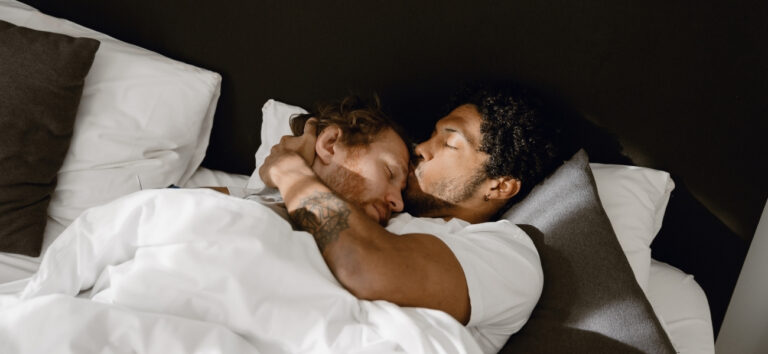

When one engages in sexual activity until orgasm, a cocktail of feel-good hormones are released. These hormones aid in feelings of relaxation, less stress, sleepiness, comfort, and intimacy, all contributing to a peaceful, dreamy state.
But what happens when you simply can’t fall asleep after sex? Well, there are a few reasons for it. Let’s take a look at why you can’t sleep after sex. It doesn’t mean that anything is “wrong” per se, but it could mean that your nervous system and brain chemistry respond differently to sex.
1. You’re Constantly In an Alert State
Your nervous system has two states: sympathetic nervous system and parasympathetic nervous system.
Your sympathetic nervous system is the one that is alert, always ready for action, so it is responsible for raising your heart rate and beat, sharpening your focus, releasing adrenaline, and keeping the mind sharp. Your parasympathetic nervous system is responsible for slowing the heart beat, deepening the breath, and enabling sleep.
So, when you’re having sex, both of these systems are at work, but the balance after orgasm will determine whether you sleep or stay away.
Usually, after sex, the parasympathetic nervous system does its thing, and you start to feel mentally quiet with droopy eyelids and heavy limbs. But, if your sympathetic nervous system is more active, you may find it difficult to fall asleep after sex.
In other words, if your sympathetic nervous system doesn’t drop sharply afterwards, and prolactin and oxytocin don’t dominate, your mind will stay active. You may (over)think, replay moments, anticipate events, and/or evaluate the experience. This is literally your brain telling you to stay alert.
2. Oxytocin Release Isn’t Strong Enough; Dopamine Stays High
Oxytocin is a hormone that brings about calm, safety, emotional closeness, and sleep, and is often referred to as the ‘bonding hormone’.
Having said that, if the sex that you’re having is more physical rather than emotional, more new, exciting, casual, mentally arousing, and/or highly stimulating, then your oxytocin levels may be low, whilst keeping your dopamine levels high.
Dopamine then competes with oxytocin and when it dominates, the brain will stay curious and awake, and sleep is delayed.
In this case, you’ll feel content but mentally aware, calm yet unable to “switch off”, sexually satisfied but without sedation.
3. Cortisol Jumps Up Quicker Than It Should
Cortisol is the stress hormone, and while many may argue that it’s a “bad” hormone, it is actually your body’s way of keeping you alert and ready for any “dangerous” situations. Cortisol increases alertness, activates glucose, and keeps you responsive.
During arousal, cortisol rises slightly, which gives you focus and engagement, after orgasm though, oxytocin and prolactin usually take over—a cortisol suppressor. Cortisol should then drop, and drowsiness follows. In other words, to fall asleep cortisol needs to be low and stable.
This might not be the case if sex happens late, fast, or intensely, as cortisol can spike after orgasm. It also may be difficult to fall asleep after sex if your brain interprets the sex as a “performance”. For example, if you were/are self-monitoring, wanting to do well, or are worried about being evaluated.
It may also be the case if you check your phone, feel pressure to sleep, or have performance anxiety worries. Cortisol and sleep are not friends, and thus, you’ll find it difficult to fall asleep after sex.
4. The Time You’re Having Sex
For this, we must consider the circadian rhythm. This is a 24-hour timing system that controls melatonin release, cortisol rhythm, core body temperature, and sleep pressure vs. wake drive. When you have sex, all four of these things are involved… and timing can determine whether the interaction helps or hinders sleep.
At night, when you’re feeling sleepy, it’s often because of sleep pressure because 1. you’ve been awake all day, and 2. your circadian alertness will be low because your cortisol and body temperature falls and melatonin rises. When you have sex, it can either support this process or fight them.
So, for sleep to follow, the circadian system must be permissive.
If you’re having sex right before bed, it can be an issue. At around this time, melatonin has started to rise, the body temperature has started to fall but sex pushes it up at the wrong moment causing cortisol to rebound into a sensitive window. The result? You feel relaxed but wired, not entirely ready to fall asleep. This is a circadian mismatch, and it’s not a failure.
On the other hand, if you have sex 60-120 minutes before bed, your body then has time to return back to a state that prepares you for sleep. Your body temperature has time to rise and fall, your cortisol has time to settle, oxytocin lingers into bedtime, and melatonin release remains intact. This all contributes to much better sleep than if sex were to be had right before sleep.
5. Biological Differences
There is no ‘normal’ response after sex—it’s largely determined by how your nervous system is wired. There are however four main post-sex response types which most people fall into:
- The ‘sedation-dominant’ type: those who feel the classic, post-orgasm sleepiness
- The ‘activation-dominant’ type: those who feel relaxed but awake
- The ‘bonding-dependant’ type: those whose sleep depends on emotional context
- The ‘arousal-sensitive’ type: those who feel ‘tired but wired’
The sedation dominant type will often feel heavy limbs, mental quiet, and find that sleep comes easy to them after sex. Common traits of people who belong to this type of response are: easier emotional regulation, and lower baseline mental arousal. It is often men who fall into this category.
The activation-dominant type will often feel calm but alert, with pleasant clarity yet with a difficulty to “switch off” after sex. Common traits of people who belong to this type of response are: thinkers, planners, and creatives who have strong imaginations. It is often women who fall into this category.
The bonding-dependent type can either feel sleepy or awake, because their oxytocin levels are subject to their experience. For example, if emotionally close sex is had, they can feel sleepy. If casual or stimulating sex is had, they can feel awake. Common traits of people who belong to this type of response are: sensitivity to connection, finding that sleep improves when cuddling or during familiarity, and those who have a strong relational nervous system. For these people, how sex is had matters more than the sex itself.
The arousal-sensitivity type can feel physically relaxed yet mentally restless after sex, and they may lie awake despite fatigue. This is because they may have a slower parasympathetic recovery period, cortisol is easily reactivated, or they’re sensitive to temperature regulation. Common traits of people who belong to this type of response are: often night owls, light sleepers, and highly responsive to stimulation. For these kinds of people, sex right before bed is counterproductive for sleep.
So, it’s true that there are many factors at play as to why you can and can’t fall asleep after sex.
To re-cap, if you’re having trouble falling asleep after intimacy, you could try timing your sex date, having less contact with your phone and other distractions afterwards, and supporting your circadian rhythm by using lower lighting.
You could also try techniques that may reset your nervous system such as breathing slowly through the nose, engaging in stillness for a few minutes, keeping to the same routines, or trying to remove things like planning, evaluating, or replaying after sex.
Of course, you could also consult your healthcare professional for advice, which is never a bad idea.
Enjoy 15% off LELO.com with code VOLONTE15